The Church of the Transfiguration (1515) stands prominently in the central square of Doliche, serving as the community’s spiritual and historical landmark.
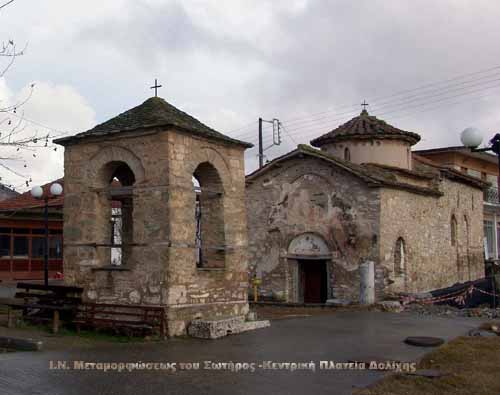
Chronologically, it ranks third among the oldest monuments in the province of Elassona, following the Monastery of Panagia Olympiotissa in Elassona (1336) and the Church of the Nativity of the Virgin in Vryzosti, Domeniko (1514).
The church has an elongated, domed design that immediately captures the attention of passers-by.
It was renovated in 1515/1516, according to a dedicatory inscription preserved inside the building.The original structure is believed to have been built during the Middle Byzantine period (10th–12th century).
The present church of Doliche measures 14.50 m in length and 4.75 m in width, consisting of a single-aisled, timber-roofed nave and two narthexes, the inner of which is covered by a dome.The interior decoration, covering most of the church’s surface, preserves a rich iconographic program.
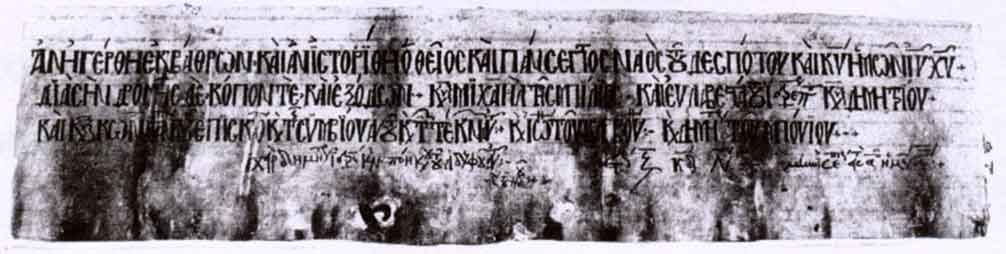
What we see today belongs to the second decorative phase, dated by inscription to 1515/1516, while traces of the earlier painting layer remain visible in the blocked lateral doorways.
This is a rare monument, retaining the virtues of Byzantine art in a transitional period.It is characteristic of an era when the scarcity of skilled painters in northern Greece led major monasteries to invite Cretan artists, who later played a decisive role in the development of painting on Mount Athos.

The first known example of this new artistic trend is the Monastery of Saint Nicholas Anapafsas in Meteora, where Theophanes the Cretan worked in 1527 — just ten years after the decoration of Doliche’s church.
Thus, the Church of the Transfiguration in Doliche represents a threshold between two artistic traditions — that of Palaeologan Macedonia and the emerging Cretan School — marking the final stage of Macedonian painting before the rise of the Cretan style.It has been officially declared a protected historical monument, distinguished for its remarkable frescoes of the early 16th century.
 ΠΕΡΡΑΙΒΙΑ